

Sean O’Rourke | September 19, 2025 | Maritime Accidents
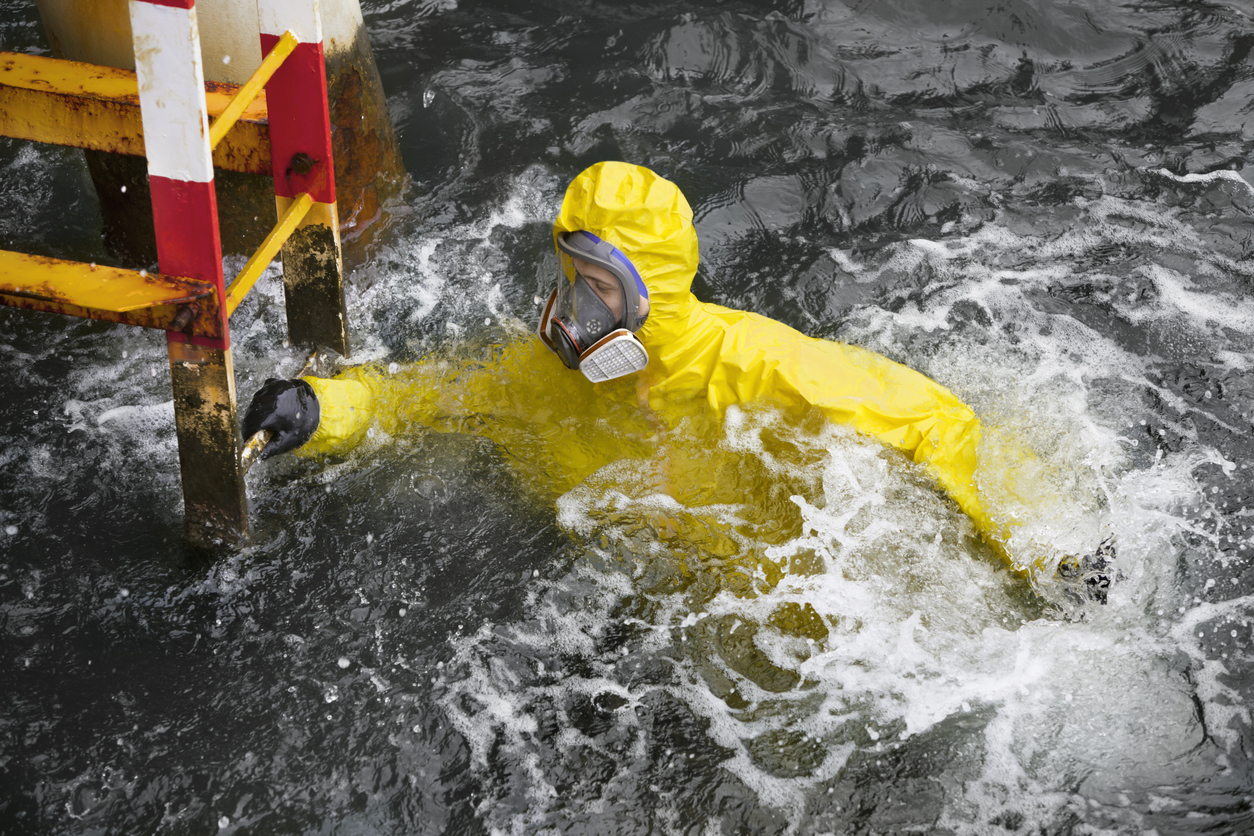
Underwater welding, a critical aspect of offshore and shoreside construction work, is a broad term that combines welding and diving. It is typically divided into two categories: wet welding and hyperbaric (dry) welding. While essential, these tasks can also prove especially dangerous for workers due to their unpredictable work environment.
With that in mind, below is a closer look at both forms of underwater welding, including how the two differ and the advantages and risks associated with each approach.
Types of Underwater Welding
Wet welding involves a diver using waterproof electrodes directly in the water. The process is often faster and less expensive, making it a common choice for emergency repairs or projects where equipment needs to be fixed quickly.
Hyperbaric welding, in contrast, uses a sealed chamber filled with a dry, pressurized gas. The welder enters the chamber and uses the dry space around them to work safely while applying precision welds. Companies may favor a hyperbaric approach when quality and durability are important, such as repairing key sections of an offshore oil platform.
Key Dangers Facing Underwater Welders
While both wet and dry/hyperbaric welding are essential for industries that depend on underwater infrastructure, they come with unique hazards. Working in extreme environments, often at great depths, means facing dive-based and electrical risks.
Some of the most significant of these dangers include the following:
- Limited visibility
- Constant interference from the movement of the water
- Electrocution from the combination of water and electrical equipment, even with protective electrodes in place
- Explosions caused by hydrogen and oxygen gas pockets forming during the hyperbaric welding process, which can ignite under pressure
- Decompression sickness, also known as “the bends”
- Hypothermia from extended exposure to cold underwater environments (which can impair judgment and physical ability)
- Long-term risks such as lung damage, nitrogen narcosis, and other pressure-related health complications
These risks make underwater welding one of the most hazardous occupations in the United States.
Training, Safety, and Equipment Standards
Staying safe while welding underwater ultimately comes down to three key aspects: training, equipment, and diligence.
As a welder, you will have to undergo rigorous training. But even beyond that, employers in the industry will also require you to pass medical and physical evaluations to ensure you can safely perform the work.
Equipment-wise, you may use a wet welder, typically equipped with a waterproof electrode. You will also be fitted with protective gear that protects you from electric shock. On the other hand, hyperbaric welding involves carefully maintained pressure chambers.
Finally, diligence primarily refers to the fact that employers are responsible for providing personal protective equipment that fits properly. Recent updates to federal safety regulations clarify that one-size-fits-all equipment is not sufficient.
What Are Your Rights if You Get Hurt?
Injuries on offshore rigs are usually covered by maritime law rather than traditional workers’ compensation, though the latter does provide some protection and benefits for injured welders. Similar protections may apply in cases involving offshore maritime accidents or industrial accidents, or following severe injuries like traumatic brain injuries.
Employers are obligated to provide safe working environments; when they fail, injured workers may have legal rights to recover damages.
Call Our Houston Maritime Injury Attorneys at Simon & O’Rourke Car Accident & Personal Injury Lawyers for a Free Consultation
Welding workplace accidents can have lasting consequences for injured people and their families. If you’ve been injured in such a scenario, report the injury to your employer and immediately seek medical attention. And remember to follow up with your provider to protect your rights to compensation and healthcare benefits.
A Houston maritime injury attorney can help you determine the best path to financial recovery for your situation. Call Simon & O’Rourke Car Accident & Personal Injury Lawyers to schedule a free consultation.
Simon & O’Rourke Car Accident & Personal Injury Lawyers
440 Louisiana St Suite 1115, Houston, TX 77002
(281) 667-4081
About The Author

Sean O’Rourke earned his law degree from Southern Methodist University School of Law and is licensed to practice in Texas. He frequently assists clients with their legal needs in Houston, with a focus on personal injury cases, especially those involving motor vehicle accidents (such as cars, commercial trucks, 18-wheelers, & motorcycles). Click here to view some of the amazing case results that Sean has successfully handled.
Location: Houston, TX